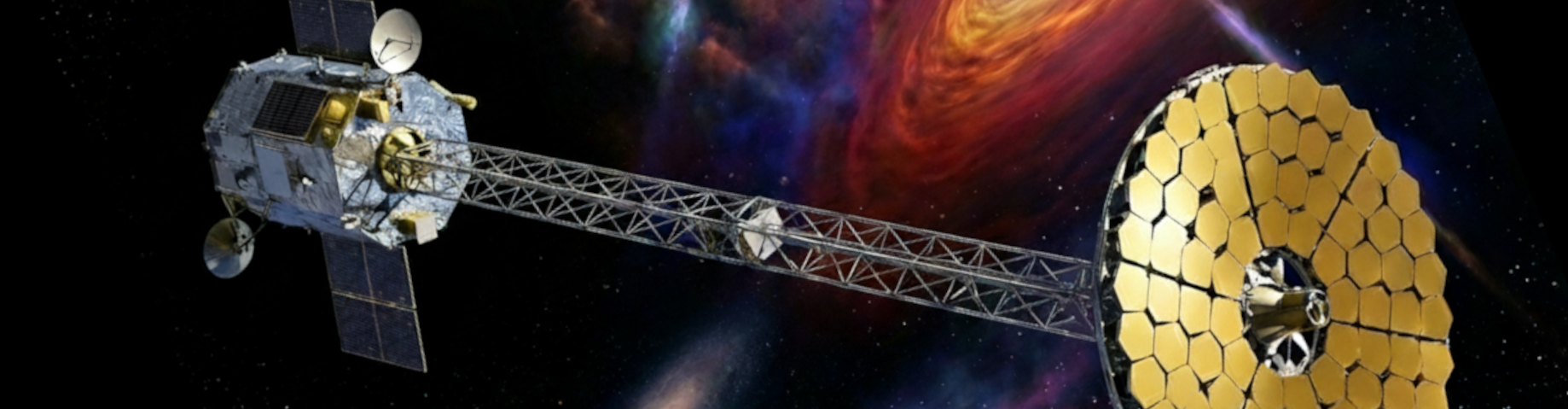
The presence of relativistic particles and magnetic fields in the intra-cluster medium (ICM) of galaxy clusters has been established by a number of observations at radio frequencies [Feretti et al., 2012, van Weeren et al., 2019]. Excluding individual galaxies, cluster radio sources can be classified into halos or mini-haloes (large-scale diffuse, extended, low surface brightness, steep-spectrum synchrotron sources) and relics (localised sources in the cluster periphery). Halos are produced by synchrotron emission from relativistic electrons spiralling around ∼ µG magnetic fields. They are ubiquitous in clusters that show indications for merging activity as indicated in X-rays or optical [Buote, 2001, Cassano et al., 2010, Govoni et al., 2004, Girardi et al., 2011]. Haloes are thought to be generated by the dissipation of the kinetic energy from luster mergers through turbulence [Brunetti and Jones, 2014]. The similarity of the halo radio morphology to that of the thermal ICM [Govoni et al., 2001a] and the correlation between the total radio halo power P1.4GHz at 1.4 GHz and the cluster total X-ray luminosity LX [Giovannini et al., 2009, Kale et al., 2013], suggest a connection between the thermal and relativistic plasmas. The relativistic electrons that produce the radio halo emission will also produce hard X-ray emission by inverse Compton (IC) scattering photons from the Cosmic Microwave background (CMB). Clusters showing extended radio emission must also have IC emission at some level but it is difficult to detect, the non-thermal component being swamped by thermal photons below 10 keV. However, the IC emission should dominate higher energies, where the bremsstrahlung continuum falls off exponentially. For a power-law energy distribution, the IC/synchrotron flux ratio gives a direct measurement of the average magnetic field strength in the ICM. The results of IC searches with X-ray satellites remain controversial. NuSTAR [Harrison et al., 2013], the first satellite with imaging capabilities in the hard X-ray band (3-79 keV) made pioneering observations of merging clusters [Wik et al., 2014, Gastaldello et al., 2015, Cova et al., 2019, Rojas Bolivar et al., 2021, 2023, T¨umer et al., 2023] clearly revealing that the average magnetic field in radio halos clusters is typically closer to ∼ 1µG than the 0.2 µG implied by past detections. However, a definitive detection of IC emission in hard X-rays remains elusive. PHEMTO will be able not only to detect, but to map with spatially resolved spectroscopy the IC emission, allowing reconstruction of the spatial distribution of the relativistic electrons and the magnetic field, in a way complementary to the Rotation Measure constraints provided by SKA. PHEMTO will enable reconstruction of the physical properties of the non-thermal particles of galaxy clusters to the same level of accuracy likely achieved by NewATHENA for the thermal ICM.
Shock fronts generated in cluster mergers are thought to be the physical mechanism behind the formation of cluster radio relics. These features can be used to determine the velocity and kinematics of the merger, and to study the conditions and transport processes in the ICM, including thermal conduction and electron-ion equilibration. The temperature profile across a shock front can disentangle the heating mechanisms of electrons and the microphysical processes at work. An instantaneous rise in temperature at the shock front and a flat profile behind indicate electrons are directly heated at the shock itself. However, in Coulomb interaction arguments, electrons largely ignore the shock and are initially only adiabatically compressed before gradually reaching equilibrium with the ions. Such measurements are extremely challenging as high shock temperatures (kT ≳ 10 keV) are poorly constrained by the low effective area above 5 keV of Chandra and XMM, and by the relatively poor angular resolution of NuSTAR. Recent studies cannot resolve the degeneracy between electron shock heating models, or give stringent upper limits on the effective thermal conductivity in post-shock regions [Markevitch et al., 2003, Markevitch, 2006, Russell et al., 2012, 2022]. The effective area at high energies and good spatial resolution of PHEMTO will allow these crucial measurements of the ICM physics to be made routinely on a large sample of clusters. By 2040, in conjunction with NewAthena, many new discoveries will be made, and the complex nature of the thermal ICM will be fully unveiled. A broad band description of this low-beta plasma, taking the ICM spectra to high energies and temperatures, will be critical for further progress in our understanding.